


Building a guitar sound that is powerful, tight and still clearly defined is an important need for rock and metal guitarists. Besides choosing the amplifier and effects, the right pedal combination plays a big part in getting a tone that fits your playing style.
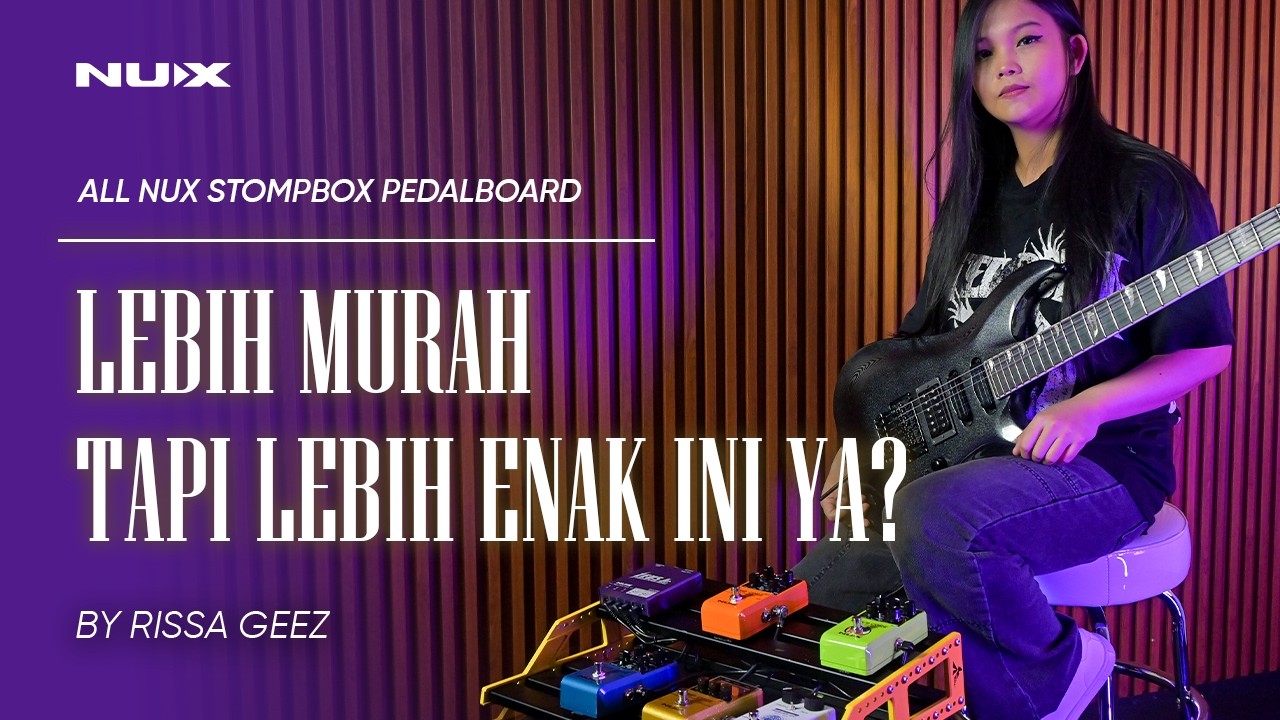
In the latest NUXPERIENCE episode, NUX Indonesia invites Rissa from Aftercoma to explore several NUX stompboxes and try to recreate the guitar sound he usually gets from the NUX Trident.
What makes this session interesting is that it does not use a single multi-effects unit as the processing center. Instead, it combines several NUX stompboxes to build rhythm, clean and lead sounds.
Getting to Know Rissa Aftercoma's Guitar Sound

As the guitarist of Aftercoma, Rissa needs a sound that can cover many playing situations, from clean passages to aggressive high-gain distortion.
In the NUXPERIENCE session, Rissa explains that there are three main sounds he usually uses when performing with Aftercoma:
- Clean Tone: A clean sound for parts of the song that need dynamics and clarity.
- Distortion Tone: A thick, aggressive distortion with a tight response for rhythm playing.
- Lead Tone: A guitar solo sound with added delay for more dimension and sustain.
These three sounds are usually built with the NUX Trident. This time, the challenge is to reach a similar tonal approach with a combination of NUX stompboxes.
Building a Pedalboard with NUX Stompboxes

One interesting part of this session is the use of NUX stompboxes that offer more than one effect character in a single pedal.
Unlike conventional analog pedals, which are usually designed for one main effect character, several NUX stompboxes provide multiple effect models and adjustable parameters to fit what a guitarist needs.
In the session with Rissa, several stompboxes are used to build the signal chain, from amp simulation and overdrive to a noise gate, delay and reverb.
1. NUX Amp Core Studio: The Foundation of the High-Gain Tone
The NUX Amp Core Studio is one of the main components in shaping the sound.
This pedal offers a range of amplifier and cabinet simulations, so guitarists can explore different tones without needing a large physical amplifier.
In the session, a high-gain amplifier character is chosen as the main foundation to get close to the sound Rissa usually uses on the NUX Trident.
The cabinet settings also get careful attention. Following Rissa's Trident preset, the setup uses a 4x12 cabinet with an SM57 microphone simulation at the center position.
This combination helps produce a thick, aggressive guitar sound with clear articulation.
After trying the initial setup, Rissa responds positively to the sound. He even notices a heavier tone with a prominent crunch texture.
This shows how much the choice of amplifier, cabinet and microphone position affects the final character of a guitar sound.
2. NUX Drive Core Deluxe: Making the Distortion Tighter

After getting the basic amplifier character, the next step is to add overdrive with the NUX Drive Core Deluxe.
This pedal offers several overdrive models that can be used to shape the gain response and distortion character.
In the NUXPERIENCE session, a TS9-style overdrive model is chosen to follow the approach Rissa usually takes on the NUX Trident.
The settings tried here follow his earlier preset:
- Level is turned up to maximum.
- Drive is set to minimum.
- Tone is set around the 12 o'clock position.
Settings like this are commonly used to push a high-gain amplifier for a more controlled low-end response and firmer picking articulation.
When the overdrive is switched on, Rissa immediately feels the distortion become tighter.
The Drive Core Deluxe also allows extra gain for lead playing, which gives guitarists flexibility when they need a more aggressive sound.
3. NUX Huminator: Keeping the Sound Under Control
In high-gain guitar playing, noise is one of the most common challenges.
The higher the gain, the more likely hum and noise become, especially when the guitar is not being played.
To help with this, the pedalboard in this session also uses the NUX Huminator as a noise gate.
A noise gate helps reduce the noise signal when the input level falls below a set threshold.
With the right settings, guitarists can keep an aggressive distortion character without excessive noise between notes.
4. Delay and Reverb: Adding Dimension to the Lead Tone
After getting a suitable rhythm tone, the exploration continues with building a lead tone.
Rissa explains that one of the effects he usually adds when playing a guitar solo is delay.
A delay repeats the signal, which adds dimension and a sense of space to lead playing.
In this session, a NUX delay stompbox is used to explore a wider lead character. The delay types discussed include analog, tape echo and reverse delay.
Reverb is also added to give the guitar sound ambience and depth.
Together, the two effects help create a livelier lead tone without changing the basic amplifier character too much.
NUX Trident vs Stompboxes: Can Rissa's Preset Sound Be Matched?
One interesting question in this NUXPERIENCE episode is whether a combination of stompboxes can get close to the sound previously built with the NUX Trident.
The NUX Trident offers many kinds of effects processing in one multi-effects unit, while the stompbox approach gives you separate pedals to set up.
Each has its own strengths.
Multi-effects units make preset management easier and bring many effects together in one device. A stompbox setup, on the other hand, lets guitarists build a pedal chain to fit their needs and make direct adjustments on each unit.
In the experiment with Rissa, the combination of amp simulation, overdrive, noise gate, delay and reverb produced a high-gain character that received a positive response.
Rissa describes the resulting sound as heavier, tighter and with an interesting distortion texture.
Although this is not a direct technical comparison test, the session shows that a combination of NUX stompboxes can be an attractive alternative for building rock and metal tones.
The Flexibility of NUX Stompboxes for Modern Guitarists

The exploration with Rissa Aftercoma shows that building a pedalboard does not always require a large set of pedals or a complicated setup.
By choosing stompboxes with the functions you need, guitarists can build a flexible effects system for different playing styles.
The NUX Amp Core Studio provides the amplifier and cabinet simulation foundation, the Drive Core Deluxe helps shape the distortion response, and the Huminator keeps noise under control.
Meanwhile, the combination of delay and reverb adds the ambience needed for lead playing.
A modular approach like this lets guitarists explore sound step by step and adjust each component to their own playing style.
Watch NUXPERIENCE with Rissa Aftercoma on the NUX Indonesia YouTube Channel
Curious how the high-gain sound from this NUX stompbox combination sounds when Rissa Aftercoma plays it live?
Watch the full exploration, from choosing the amplifier and setting the overdrive to adding delay and reverb to shape the lead tone.
Don't forget to subscribe to the NUX Indonesia YouTube channel for the latest content on guitar sound exploration, product tutorials, artist sessions and more pedalboard inspiration.
Find product information, tone inspiration and more content on the official NUX Indonesia website: https://www.nuxaudio.id.